
Have you ever noticed how often we use the phrase “I am fine” as an umbrella explanation for everything?
When someone asks how we are doing, our default answer is almost always the same. “I am fine. Just a little tired, but otherwise okay.” We treat our internal energy like a simple math problem. We assume that if we are running low, we can just plug ourselves into a bed for eight hours and wake up fully restored. Sometimes, a good night of sleep does not actually fix the fatigue.
When sleep fails to fix that underlying tiredness, it is usually a sign that the exhaustion is not just physical. It is connected to mental health and your body’s way of sending you a warning.
Drowning Out the Engine Noise
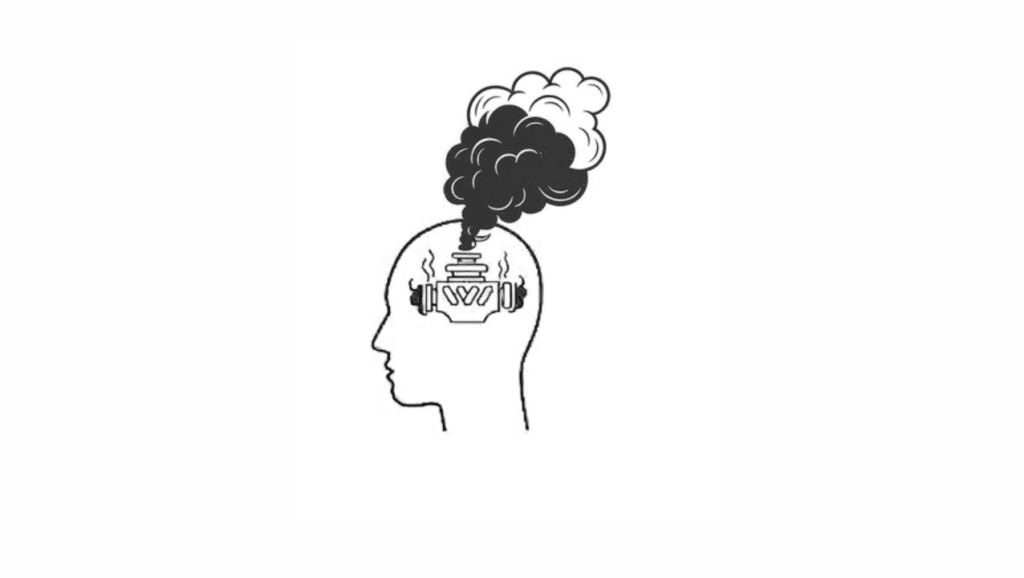
Imagine you are driving your car down the highway and you hear a strange, worrying clanking noise coming from the engine. Instead of pulling over or checking under the hood, you simply reach over and turn up the volume on the radio. The music fills the car, the clanking gets drowned out, and you keep driving. For a little while, you can convince yourself that everything is fine because you cannot hear the noise anymore. Whether you hear it or not, the wear and tear is still happening quietly under the hood, and eventually, the car is going to force you to pull over.
Using the phrase “I am fine” is a common way to turn up the radio on internal stress. People often tell themselves that the issue is simply a busy week, a temporary project, or a hectic season with the family. Brushing off the exhaustion can become a shield when acknowledging the real engine noise feels too overwhelming. It can feel much easier to cope with a lack of sleep than to admit that the emotional weight is heavy, boundaries have eroded, or a quiet numbing has taken over just to get through the day.
Adapting is Not the Same as Healing
As humans, we are incredibly adaptable. When chronic stress, family tension, or workplace anxiety slowly creeps into our lives, we do not just stop functioning. We learn how to carry it. We adjust our posture, we lower our expectations, and we keep moving forward. Eventually, carrying that heavy baseline of tension starts to feel completely normal. It becomes the background noise of our lives. In reality, your system is just working twice as hard behind the scenes just to keep you upright.
Often, this is where quiet numbing takes over. We think we are just muting the stress, but human emotions do not work that way. As author and researcher Brené Brown famously notes, “We cannot selectively numb emotions. When we numb the painful emotions, we also numb the positive emotions.” By trying to shut out the anxiety or the overwhelm, we accidentally shut out our ability to feel joy, excitement, and connection too.
Minor daily tasks can begin to feel monumental when a system is running on empty. Decisions about dinner can feel exhausting, and patience can wear thin over small matters. Irritability, detachment, or a sudden lack of motivation for beloved hobbies are common signs of this deeper fatigue. These experiences usually point to something more significant than a poor sleep cycle. They often suggest that the internal engine is overheating.
Turning Down the Volume
Stepping away from the “I am fine” cycle does not mean there is a crisis. It does not require a dramatic breakdown or a clinical label. It just means choosing to turn down the radio for a moment, listening to what your body is actually asking for, and giving yourself permission to say, “This is heavy, and I cannot carry it all by myself.”
Counselling is just a safe, down to earth space where we can pull over, lift the hood together, and look at the engine noise without any judgment. Paying attention to those early warning signs simply prevents a minor issue from turning into a total breakdown on the side of the road.
The next time you catch yourself saying, “I am fine,” take a breath and look a little closer. Are you actually fine, or are you turning up the radio?